Port of Spain · Trinidad and Tobago
Hayes Court
Quiet verandas and cast-iron detail among the Magnificent Seven
Explore this place / Introduction
Hayes Court occupies Lot 21 on Maraval Road opposite the Savannah. Its restrained domestic proportions contrast with the more theatrical towers and ornament of its neighbours.
A 1910 Anglican bishop’s residence known for its surrounding verandas and cast-iron work.
About this place and its management · Hayes Court
Anglican bishop’s residence; privately owned and heritage-listed by the National Trust of Trinidad and Tobago.
Hayes Court is associated with the Anglican bishopric and is recorded by the National Trust as privately owned with restricted access. The National Trust documents its heritage significance; that listing is not a public-entry permit or a claim that the Trust operates the residence.
The Anglican bishop’s residence was planned in 1904 and completed in 1910 by Taylor and Gillies. It was named after Bishop Thomas Hayes, who served in Trinidad from 1889.
Visit advice and highlights
What to notice
Compare the deep, shaded verandas with nearby Queen’s Royal College and Mille Fleurs. The building remains a residence, so respect privacy and photograph only from public space.
Photography and visitor tips
Use a broad street-side frame for the veranda; avoid aiming into occupied private rooms.
Plan your visit
Combine this quiet façade stop with Queen’s Royal College and Mille Fleurs on the same western-Savannah walk.
Suggested duration: Allow 15–25 minutes for the exterior.
Essential information
A 1910 Anglican bishop’s residence known for its surrounding verandas and cast-iron work.
- Address
- Lot 21 Maraval Road, St. Clair, Port of Spain, Trinidad and Tobago
- Opening / access
- Private residence; exterior viewing from public areas
- Admission
- No fee to view the façade from the public sidewalk; no general walk-in entry
- About this place and its management
- Anglican bishop’s residence; privately owned and heritage-listed by the National Trust of Trinidad and Tobago.
- Suggested duration
- Allow 15–25 minutes for the exterior.
- Access and visitor rules
- National Trust records private ownership and restricted public access. Do not enter the property without permission.
- Walking and local transport
- Walk from the Savannah western perimeter to Lot 21 Maraval Road via public sidewalks and safe crossings.
- Official source and current arrangements
- National Trust of Trinidad and Tobago
Opening / access
Private residence; exterior viewing from public areas
National Trust records private ownership and restricted public access. Do not enter the property without permission.
Official source and current arrangementsTickets and pricing
No fee to view the façade from the public sidewalk; no general walk-in entry
Getting there
Walk from the Savannah western perimeter to Lot 21 Maraval Road via public sidewalks and safe crossings.
From Queen’s Park Savannah, use its perimeter as your orientation point. Walk via designated crossings or take a local taxi; road access and traffic change during events.
History, architecture and culture
About and historical background
The Anglican bishop’s residence was planned in 1904 and completed in 1910 by Taylor and Gillies. It was named after Bishop Thomas Hayes, who served in Trinidad from 1889.
Architecture and highlights
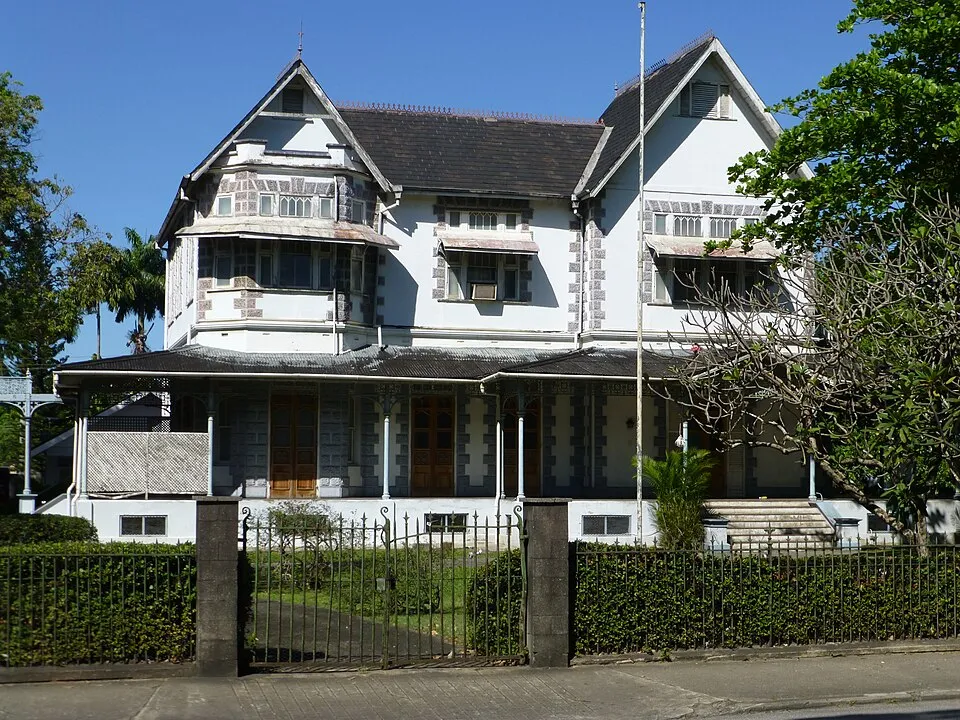
Verandas wrap the north, east and south sides, with decorative cast-iron supports. The western elevation features traditional Demerara windows; the design blends French colonial and Scottish ironwork traditions.
What to notice
Compare the deep, shaded verandas with nearby Queen’s Royal College and Mille Fleurs. The building remains a residence, so respect privacy and photograph only from public space.
What makes this site distinct
A 1910 Anglican bishop’s residence known for its surrounding verandas and cast-iron work.
History, architecture and culture: Hayes Court
The house takes its name from Bishop Thomas Hayes, who served the Anglican community in Trinidad from 1889. It belongs to the early-twentieth-century transformation of Maraval Road into a row of prominent homes and institutions. Its ecclesiastical association distinguishes it from the merchant-built residences alongside it.
Start with the wraparound veranda: notice how its shade mediates between the tropical climate and the interior rooms. Then look at the ironwork, columns and proportions of the frontage. A slightly angled view from the public pavement is more revealing than a straight-on photograph.
Suggested visit route
- Begin near Queen’s Royal College on the Savannah’s western side.
- Follow the public sidewalk towards Lot 21 Maraval Road.
- Observe the veranda columns and window treatment.
- Continue towards Mille Fleurs and Roomor using safe crossings.
Before you go
National Trust records private ownership and restricted public access. Do not enter the property without permission.
Compare the deep, shaded verandas with nearby Queen’s Royal College and Mille Fleurs. The building remains a residence, so respect privacy and photograph only from public space.
Recommended photo viewpoints
Capture the veranda depth from a legal oblique street-side position.
Use a broad street-side frame for the veranda; avoid aiming into occupied private rooms.
Photos of this attraction
Questions before visiting
- When was Hayes Court completed? In 1910.
- Can visitors enter? National Trust lists restricted access.
- Where is it? Lot 21 Maraval Road, St. Clair.
Where to stay
St. Clair is convenient for the entire Magnificent Seven exterior walk.
Port of Spain and St. Clair offer lodging options for visitors planning to explore the Savannah and nearby cultural attractions. Compare current access and transport before booking.
Visitor ratings and reviews
For the current Google Maps rating, review count and individual visitor opinions, open this place’s own listing. No unverified rating is reproduced here.
Read reviews for this placeLocation and navigation
Lot 21 Maraval Road, St. Clair, Port of Spain, Trinidad and Tobago
View this attraction on Google Maps